
Plastic
Our comprehensive testing services push products to their limits, ensuring they’re ready for the demands of everyday use. We test to established standards and requirements and can also develop custom methods that meet customer-defined applications.
Tensile Strength and Elongation at Break
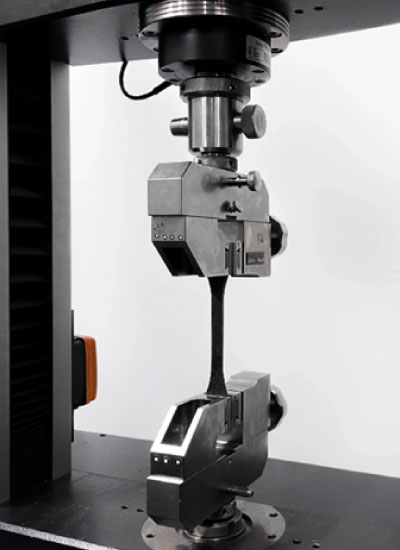
ASTM
ASTM D638
ISO
ISO 527
IS
IS 13360 - Part 5
The tensile and elongation test determines the ultimate strength and deformation characteristics of your plastic materials under stretching forces using the Tensile Test (ASTM D638).
This fundamental test is crucial for understanding how a polymer will behave when subjected to tension, which is vital for structural applications. Attuned Polymer Laboratory accurately measures key properties including Tensile Strength at Yield, Tensile Strength at Break, Elongation at Break, and the Modulus of Elasticity (Young’s Modulus).
These data points are essential for engineering design, material specification, and predicting product performance under load. By plotting the resulting stress-strain curve, we give you a comprehensive picture of the material’s elastic and plastic behavior. Partner with Attuned Polymer Laboratory to ensure your material meets the demanding specifications required for durability and long-term functionality.
Hardness (Durometer)
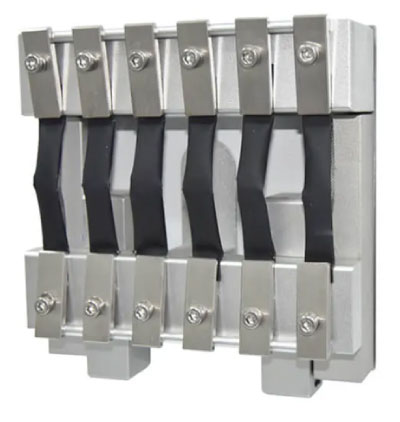
ASTM
ASTM D2240
ISO
ISO 868
IS
IS 13360 - Part 5
The test accurately assess the indentation resistance of your polymers, elastomers, and soft plastics with the Hardness (Durometer) Test (ASTM D2240).
This standard test method uses a Durometer instrument to measure the depth of penetration of a standardized indenter point into the material under a specific force. Hardness is a crucial indicator for material consistency, quality control, and predicting how a product will perform in applications requiring resistance to penetration, abrasion, or permanent deformation. At Attuned Polymer Laboratory, we utilize various Shore scales (e.g., Shore A, D, etc.) to ensure the correct measurement range for your specific material. Understanding the precise Durometer value is essential for product design, ensuring a comfortable feel, proper sealing, and longevity in consumer and industrial goods.
Rockwell Hardness
ASTM
ASTM D785
ISO
ISO 2039
IS
IS 13360 - Part 5
Through this test, quantify the resistance of your rigid plastics and composites to permanent indentation with the Rockwell Hardness Test (ASTM D785).
Rockwell hardness is a fundamental mechanical property test that measures the net increase in depth of impression when a major load is applied to a specimen, subsequent to the application of a minor load. This method is particularly useful for materials like rigid thermoplastics, thermosets, and laminated plastics, providing a single, easily comparable number. The results are crucial for product design, material specification, and quality control, indicating a material’s potential wear resistance and structural integrity. By selecting the appropriate scale (e.g., R, L, M, E, or K), Attuned Polymer Laboratory ensures accurate and relevant data for your specific polymer grade. Ensure the consistency and durability of your rigid products with our reliable ASTM D785 testing services.
Flammability
IS
UL 94, FMVSS 302
This test verifies the fire safety rating of your plastic components under the internationally recognized UL 94 test method.
The UL 94 test is essential for safety compliance and measures the ability of a plastic material to extinguish a flame after ignition, as well as the dripping behavior of the material. We perform both horizontal (HB) and vertical (V-0, V-1, V-2) burning tests to categorize your polymer’s fire resistance, providing critical data required for applications in electronics, automotive, and construction. Achieving the appropriate UL 94 rating is non-negotiable for market access and product liability. Attuned Polymer Laboratory helps you secure the necessary certification and assures the fire safety performance of your polymer products.
Specific Gravity & Density

ASTM
ASTM D792
ISO
ISO 1183
IS
IS 13360 - Part 3
The test accurately determines the specific gravity and density of your plastic materials using the displacement method in accordance with ASTM D792.
Density is a critical property for material identification, quality control, and calculating volumetric-to-mass ratios, which directly impact material cost and volume requirements in production. At Attuned Polymer Laboratory, we precisely measure the mass of a specimen in air and then in a liquid medium (typically water or alcohol) to calculate its density. This fundamental value is essential for ensuring batch consistency, verifying material composition, and predicting material behavior in various applications. Rely on Attuned Polymer Laboratory for accurate density data that underpins effective material engineering and efficient manufacturing.
Melt Flow Rate and Melt Flow Index

ASTM
ASTM D1238
ISO
ISO 1133
IS
IS 13360 - Part 4
This test quickly and reliably assess the processing characteristics and viscosity of thermoplastic materials with the Melt Flow Rate (MFR) Test (ASTM D1238).
The MFR test is a critical Quality Control (QC) tool that measures the ease with which the melt of a thermoplastic polymer flows through a standardized die under specified temperature and load conditions. The result, expressed in grams per 10 minutes (g/10 min), is a direct indicator of the material’s average molecular weight and, consequently, its processability (e.g., in injection molding or extrusion). Consistency in MFR is paramount for maintaining a stable and efficient manufacturing process. At Attuned Polymer Laboratory, we help you ensure batch-to-batch uniformity and rapidly screen incoming material quality, reducing costly production errors and material waste.
FTIR
ASTM
ASTM D3677
ASTM E1252
The test unravels the chemical fingerprint of your plastic materials and quickly identify unknown polymers or contaminants using FTIR Spectroscopy (ASTM D3677 & E1252).
FTIR is a non-destructive, indispensable analytical technique that provides a spectrum showing the absorption of infrared light at specific wavelengths, which corresponds to the presence of particular chemical functional groups.
At Attuned Polymer Laboratory, we utilize this method for rapid polymer identification, material verification, quality control, and failure analysis. The resulting spectral data allows us to verify raw material composition, detect additives, plasticizers, and stabilizers, and identify surface contaminants or degradation products. By following the established ASTM D3677 and E1252 standards, we deliver accurate and conclusive chemical characterization vital for product development and resolving complex material issues.
TGA
ASTM
ASTM E1131
ISO
ISO 11358
Through this test, gain deep insights into the thermal stability, composition, and degradation of your polymers with Thermogravimetric Analysis (TGA) (ASTM E1131).
TGA precisely measures the change in mass of a material as it is heated in a controlled atmosphere. This test is indispensable for material characterization and quality control. At Attuned Polymer Laboratory, we use TGA to accurately determine the filler content (ash), volatile content, and polymer decomposition temperatures. The resulting data helps engineers understand a material’s service temperature limits and verify the proportion of components like carbon black or glass fiber in composites. This thermal fingerprint ensures batch-to-batch consistency and prevents thermal failure in critical applications.
Izod impact
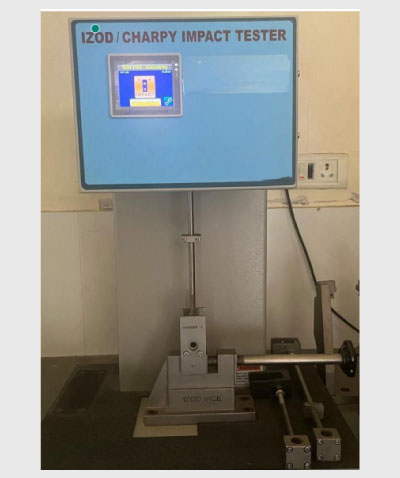
ASTM
ASTM D256
ISO
ISO 180
IS
IS 13360 - Part 5
At Attuned Polymer Laboratory, we provide precise testing to measure the energy absorbed by a specimen during a high-speed blow from a calibrated pendulum. This standard method is essential for predicting the service life and durability of plastics exposed to potential mechanical shocks in real-world applications. The results, typically reported in J/m or ft-lb/in of notch, are vital for quality control, material selection, and comparative analysis across different polymer grades and formulations.3 Whether you’re working with consumer goods, automotive components, or packaging, understanding the Izod impact strength is key to ensuring product safety and performance. Trust Attuned Polymer Laboratory for accurate, reliable, and timely ASTM D256 testing
Charpy impact
ASTM
ASTM D6110
ISO
ISO 179
IS
IS 13360 - Part 5
The test measures the critical impact strength and notch sensitivity of your plastic materials under rapid loading conditions with the Charpy Impact Test (ASTM D6110).Similar to Izod, the Charpy test is a fundamental measure of toughness, determining the energy absorbed by a specimen when struck by a pendulum hammer. The key difference is the support configuration; the Charpy specimen is supported at both ends and struck in the middle, providing results often used for quality control and material comparisons. At Attuned Polymer Laboratory, we follow ASTM D6110 to deliver reliable data, typically reported in J/m^2 or ft-lb/in^2. This information is vital for predicting fracture behavior and ensuring the safety and durability of materials used in load-bearing applications, construction, and severe environments. Partner with Attuned Polymer Laboratory to validate the impact resistance of your polymer components.
Resistance to chemical reagents
ASTM
ASTM D543
ISO
ISO 175
The test evaluates the crucial chemical compatibility and durability of your plastics when exposed to various corrosive environments using the ASTM D543 test method.
This standard involves immersing test specimens in specific chemical reagents (such as acids, bases, solvents, or oils) for a defined period under controlled temperature and stress conditions. We then assess the material for changes in weight, dimensions, appearance, and mechanical properties (like tensile strength or hardness). This data is vital for applications in chemical processing, medical devices, and industrial equipment where plastic components must maintain integrity upon contact with aggressive fluids. By quantifying the material’s resistance, Attuned Polymer Laboratory helps you select the optimal polymer that will prevent premature failure, ensuring long-term product safety and performance in challenging chemical settings.
Water absorption
ASTM
ASTM D570
ISO
ISO 62
IS
IS 13360 - Part 8
The tests assess the crucial moisture sensitivity of your plastic materials with the Water Absorption Test (ASTM D570).This standard test method determines the relative rate at which a plastic specimen absorbs water under defined immersion conditions (e.g., 24-hour immersion or immersion until saturation). The measured percentage increase in weight is a critical indicator of a material’s dimensional stability, electrical properties, and mechanical strength when exposed to humid or wet environments. High water absorption can lead to swelling, warping, and degradation in performance. At Attuned Polymer Laboratory, we provide precise ASTM D570 data essential for selecting materials for applications in outdoor environments, plumbing, and high-humidity electronics. Ensure the longevity and reliability of your products by understanding their resistance to moisture with our accurate testing.
Low Temperature Brittleness
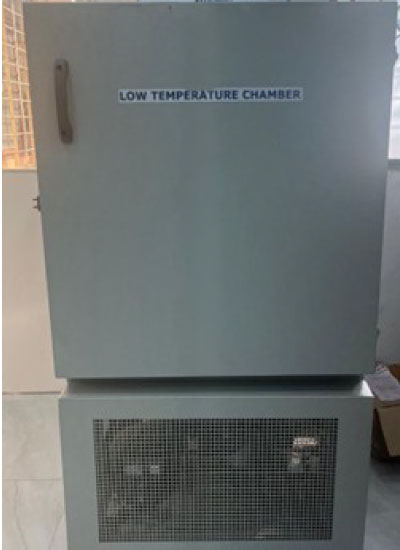
ASTM
ASTM D746
ISO
ISO 974
IS
IS 13360 - Part 6
The tests assess the crucial moisture sensitivity of your plastic materials with the Water Absorption Test (ASTM D570).This standard test method determines the relative rate at which a plastic specimen absorbs water under defined immersion conditions (e.g., 24-hour immersion or immersion until saturation). The measured percentage increase in weight is a critical indicator of a material’s dimensional stability, electrical properties, and mechanical strength when exposed to humid or wet environments. High water absorption can lead to swelling, warping, and degradation in performance. At Attuned Polymer Laboratory, we provide precise ASTM D570 data essential for selecting materials for applications in outdoor environments, plumbing, and high-humidity electronics. Ensure the longevity and reliability of your products by understanding their resistance to moisture with our accurate testing.
Volume Resistivity
ASTM
ASTM D257
The test accurately determines the electrical insulation performance of your plastic materials with the Volume Resistivity Test (ASTM D257). Volume resistivity is a critical electrical property that measures a material’s resistance to current leakage through its bulk (volume). Expressed in Ohm-cm or Ohm-meters, this value is essential for materials used in electrical insulation, electronics, and high-voltage applications. Following ASTM D257, Attuned Polymer Laboratory applies a DC voltage across a specimen and measures the resulting current to precisely calculate the resistivity. High volume resistivity indicates superior insulating capability, vital for preventing short circuits and ensuring the long-term reliability of electrical components. Trust Attuned Polymer Laboratory for accurate data that validates your material’s suitability for demanding electrical environments.
Surface Resistivity
ASTM
ASTM D257
The tests evaluates the electrical insulation integrity and contamination sensitivity of your plastic surfaces with the Surface Resistivity Test (ASTM D257). Surface resistivity is a key electrical property that measures a material’s resistance to current flow across its surface. Expressed in Ohms or Ohms per square, this value is crucial for materials used in electronics, static dissipation, and high-voltage components where surface contamination or moisture could lead to leakage. Following ASTM D257, Attuned Polymer Laboratory applies a DC voltage between two electrodes on the specimen’s surface and measures the current flow. Low surface resistivity indicates a pathway for current leakage, which can be critical for materials used as insulators or antistatic agents. Partner with Attuned Polymer Laboratory for accurate data to ensure your components meet strict electrical safety and performance standards.
Dielectric Strength
ASTM
ASTM D149
The test determines the maximum electrical stress your plastic insulators can withstand before electrical breakdown with the Dielectric Strength Test (ASTM D149). Dielectric strength is a fundamental measure of insulating performance, representing the highest voltage a material can endure without failure when placed between two electrodes. Expressed in volts per unit thickness V/mil or kV/mm, this value is crucial for ensuring the safety and reliability of materials used in cables, switchgear, protective coatings, and high-voltage components. Following ASTM D149, Attuned Polymer Laboratory gradually increases the voltage until a disruptive discharge (breakdown) occurs. This test is essential for quality control, material grading, and designing systems that must reliably isolate electrical currents. Partner with Attuned Polymer Laboratory to validate the critical electrical integrity of your polymer insulation.
Weathering Resistance

ASTM
ASTM G154
ASTM G155
ISO
ISO 4892
The test simulates the long-term effects of outdoor exposure on your plastics with accelerated weathering tests (ASTM G154 & ASTM G155).
These critical tests accelerate the damaging effects of sunlight, moisture (rain/dew), and temperature changes in a controlled laboratory environment.
ASTM G154 (Fluorescent UV Apparatus): Primarily uses UV lamps to simulate the short-wavelength UV portion of sunlight, which is the most damaging to polymers.
ASTM G155 (Xenon Arc Apparatus): Provides a more full-spectrum simulation of natural sunlight, including UV, visible, and infrared light, often considered a closer match to natural exposure.
At Attuned Polymer Laboratory, we use these methods to assess material degradation, including color change, loss of gloss, cracking, chalking, and reduction in mechanical strength. This testing is essential for predicting product lifespan and validating stabilizers for materials used in outdoor, automotive, and construction applications.